Meteor shower watching checklist for UK stargazers
You don't need a telescope to watch a meteor shower. You need a clear sky, a spot where no streetlight shines in your eyes, and something to lie back on. Everything after that is patience and warm clothing.
The Perseids in August and the Geminids in December are the two showers most UK stargazers plan their year around, but useful ones arrive in every season. The difference between a disappointing night and a memorable one is almost always preparation.
Get the timing right
Showers have a peak night, but the peak is a window of hours rather than a single moment, and predictions shift. If the weather looks better the night before or after, go then. You will still see plenty.
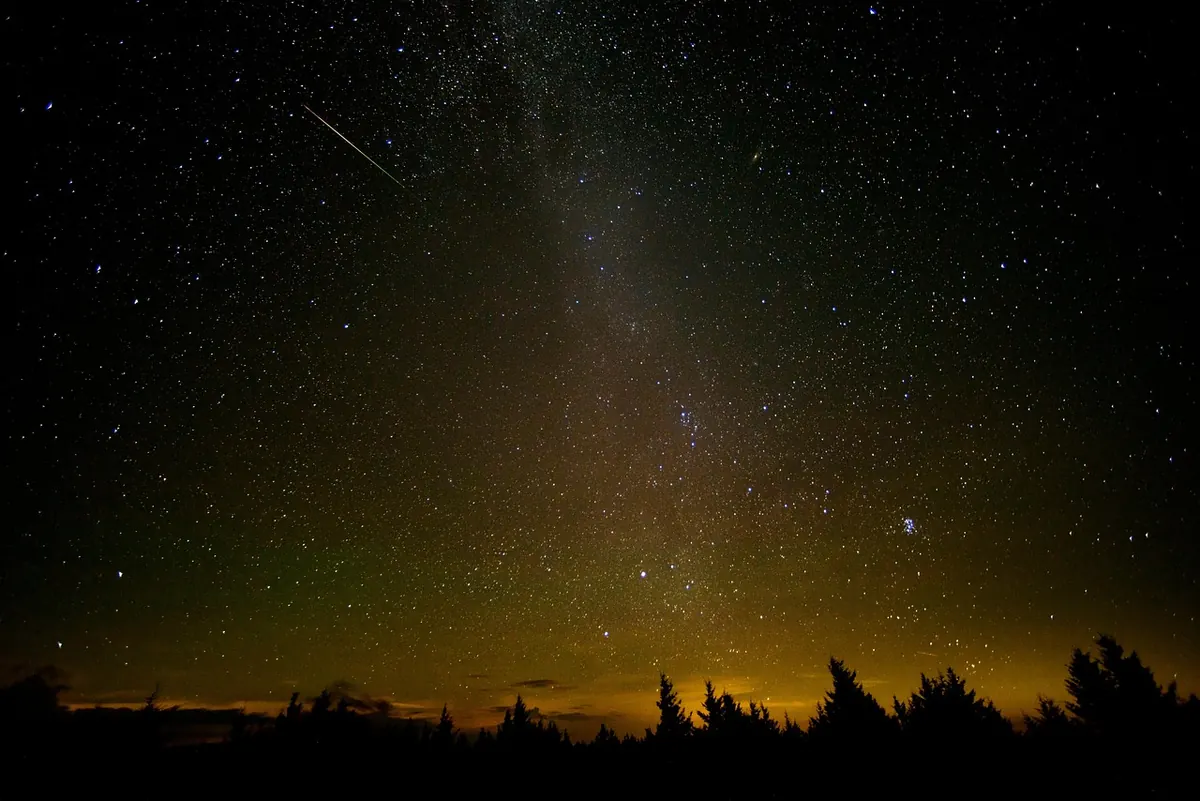
Within a night, the hours after midnight and before dawn usually give the best rates. Earth is turning into the debris stream head-on, and the radiant — the point in the sky the meteors appear to come from — is higher. The Perseids are a good example: a few meteors an hour in the evening, a much steadier stream by 2am.
Check the moon before you commit. A bright moon washes out faint meteors, so if the peak falls near full moon, plan for the nights either side or accept a quieter show.
Find a dark site you can actually get to
Light pollution matters more than any other factor. A village-edge field twenty minutes away will beat a town garden every time, and a Dark Sky Reserve such as Exmoor, Eryri, Galloway Forest Park or Kielder will beat both. You do not need the darkest sky in Britain, though. You need no direct light in your eyes and a wide view of the sky.
Look for an open horizon, especially towards the radiant, and stand with a hedge, wall or building behind you to block nearby lamps. Bring a torch with red light for checking the ground — white light undoes your dark adaptation in seconds.
Kit: the small things that save the night
- A reclining chair, or a groundsheet and sleeping bag. Lying flat beats craning your neck, and you will see more sky.
- More layers than you think. An August night turns cold once you stop moving; December watching needs thermals, hat, gloves and a thick coat.
- A flask and snacks. Watching is slow work, and a hot drink at 2am is transformative.
- A red torch, or a phone screen dimmed to its lowest setting.
- A cloth for dew, plus a spare battery if you are using a phone for charts or timings.
- Midgie repellent in summer, particularly in Scotland and the wetter parts of the north.
Let your eyes adjust, then watch properly
It takes roughly twenty minutes for your eyes to adapt to the dark, and one flash of a headlight undoes much of that. Set up, sit down and let them settle.
Don't stare at the radiant. Meteors seen close to it are short and foreshortened; the long, bright streaks appear thirty or forty degrees away. Rest your gaze on a patch of sky off to one side and let your peripheral vision do the work.
Binoculars are worth having for checking a bright train left behind by a fireball, but they narrow your view. Sweep with your eyes for most of the time and reach for the binoculars only for detail.
Recording what you see
A simple tally is enough: note the time, the direction and roughly how bright each meteor was. Comparing counts across an hour gives you a real sense of the shower's rhythm and makes a cold night feel purposeful.
If you want photographs, use a tripod, a wide lens and manual focus set to infinity, then take a series of exposures of fifteen to thirty seconds and check the results as you go. A single frame rarely catches a meteor; a sequence lasting an hour often does.
Shower notes for the UK year
- Quadrantids (early January): a sharp peak, so timing matters, and the radiant sits awkwardly low. Best before dawn.
- Lyrids (around 22 April): modest but dependable, with the occasional bright fireball.
- Eta Aquariids (early May): fast meteors from Halley's Comet debris, best in the couple of hours before dawn and strongest from southern Britain.
- Perseids (12–13 August): the reliable summer favourite — warm nights, bright meteors and a good stream after midnight.
- Orionids (late October): quick, faint meteors, again favouring the small hours.
- Leonids (mid-November): swift meteors with persistent trains, best just before dawn.
- Geminids (13–14 December): often the best of the year for UK watchers — slow, bright and generous, with a good showing before midnight too.
Safety, comfort and courtesy
Dark sites are often uneven, remote or both. Take a torch for the walk in, park legally and never in a field gateway, and if you are heading somewhere lonely, tell someone where you are going and when you expect to be back. Respect closures, keep gates shut, take your litter home and stay off private land.
If you are watching in a group, agree in advance that torches stay red and headlights stay off until everyone has finished.
Your final checklist
- Check the peak dates and the moon phase, and keep a backup night free.
- Pick a dark, open site with a clear horizon and somewhere safe to sit.
- Pack layers, a chair, a flask, a red torch and midgie repellent in summer.
- Arrive before dark if you can, so you can find your footing.
- Allow twenty minutes for your eyes to adapt, then look away from the radiant.
- Note timings and counts, and be patient — showers come in bursts.
Give it an hour. Meteors arrive in lulls and flurries, and
Photo: DumitruS / Pixabay