How do satellite constellations work and what do they mean for astronomy?
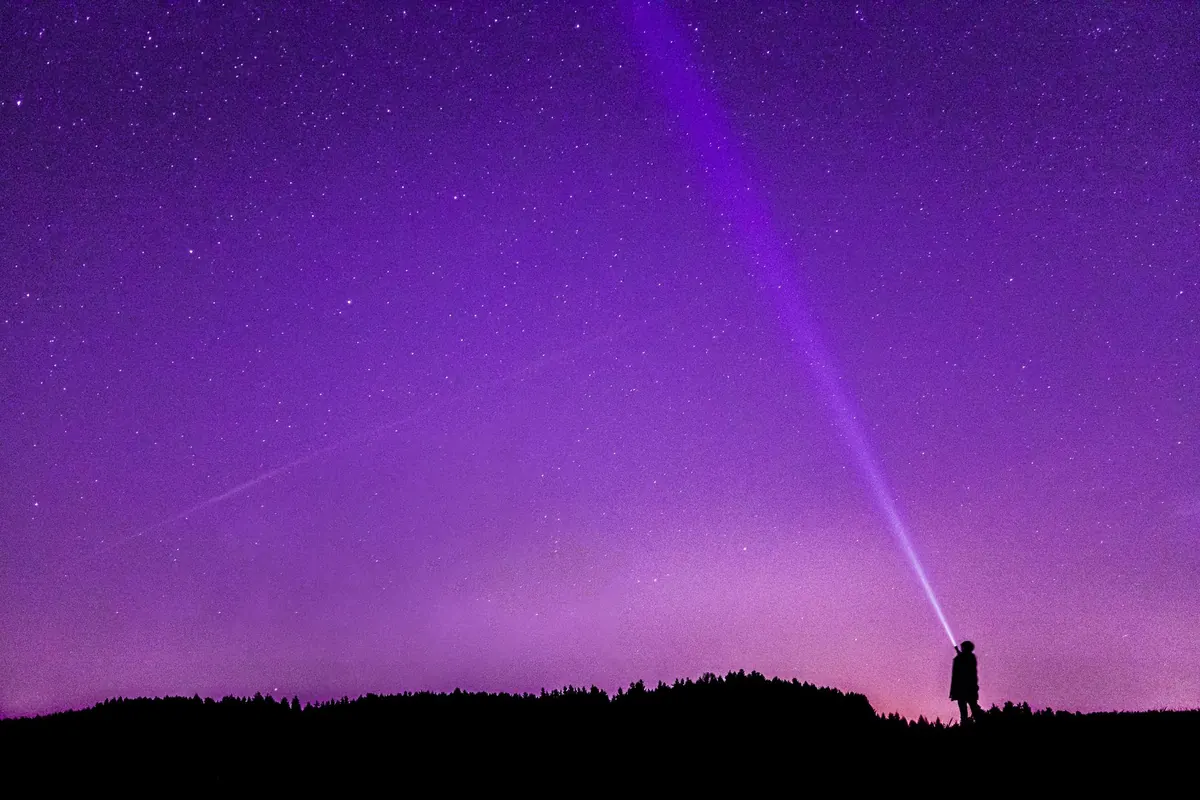
Look up on a clear evening and, with a little luck, you might catch a line of bright dots moving steadily across the sky. They hold formation, they do not blink, and they cross the whole sky in a few minutes. That is a satellite constellation: not one spacecraft but a fleet, arranged so that something is always overhead.
These fleets carry broadband, satnav signals and a growing share of global data traffic. They have also changed what the night sky looks like from a dark site, which has put astronomers and satellite operators in the same conversation.
What makes a constellation different from a single satellite
A one-off satellite is a lone machine doing a specific job: a weather imager, a science payload, a single communications relay. A constellation is a system. The satellites share a design, a set of orbits and a purpose, and their positions are timed so that coverage is continuous rather than occasional.
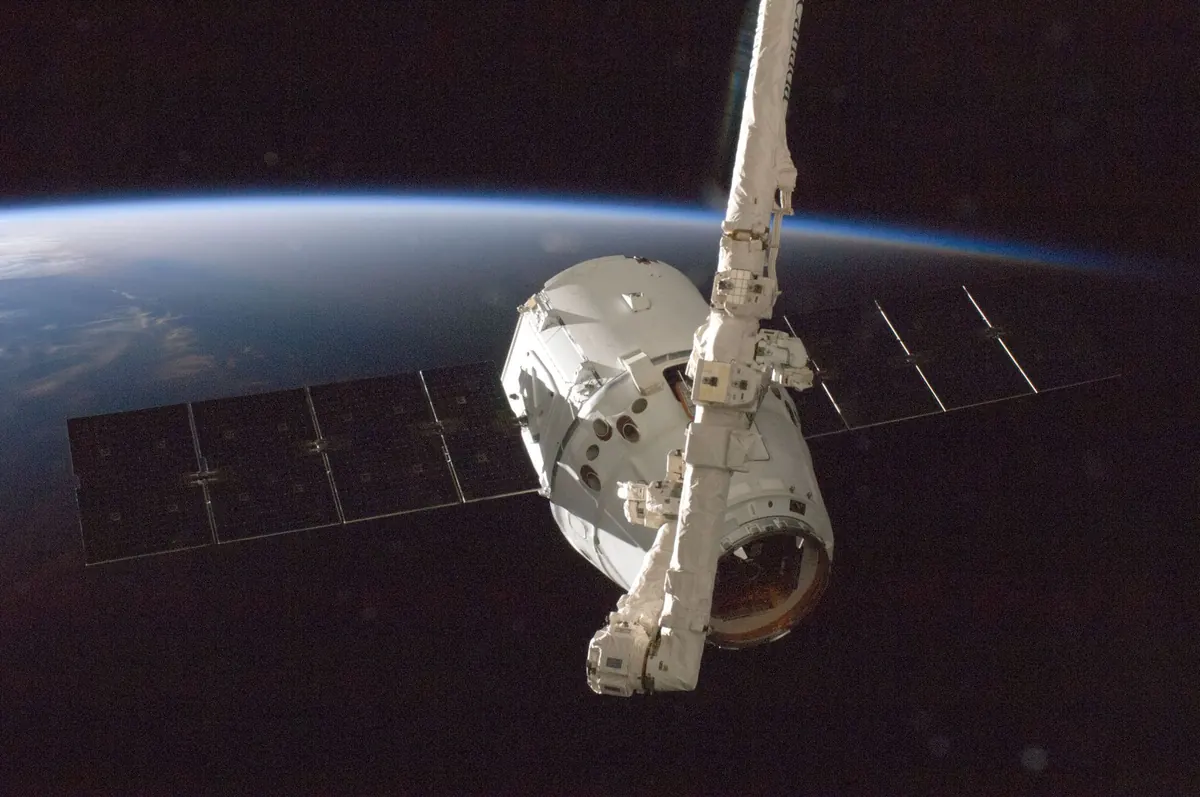
Iridium, built for satellite phones, was one of the first commercial examples. GPS is a constellation too, and so are the broadband fleets that most people notice now, including Starlink and OneWeb, with Amazon's Kuiper system following. Each one is essentially a mobile phone network turned upside down: your phone hands over between masts on the ground, while a satellite dish or terminal hands over between spacecraft above it.
How the fleet actually works
Most modern constellations sit in low Earth orbit, roughly 300 to 1,200 kilometres up. At that altitude a satellite completes an orbit in about ninety to a hundred minutes, so any single spacecraft is only above your horizon for a few minutes at a time. That is the core engineering problem. One satellite is a fast-moving dot; keeping a service running needs hundreds or thousands of them.
Four things make the system hold together:
- Orbital shells and planes. Satellites are spread across different altitudes and different orbital inclinations, like lanes on a racetrack. Some shells cover the populated mid-latitudes; others reach closer to the poles.
- Handover. As one satellite drops below the horizon, another rises to take the connection. Done well, you never notice it happening.
- Inter-satellite links. Newer fleets use laser links between spacecraft, so data can hop across the constellation before being handed down. That reduces how many ground stations are needed.
- The ground segment. Antennas, gateways and control centres that track the fleet, upload software and manage the traffic. This is the part nobody photographs, and it is where much of the cost sits.
Because low orbits decay naturally, these satellites also come down within a few years of retirement. That is deliberate: it keeps orbits from filling with long-lived junk, though it does mean constant replacement launches.
Why they turn up in your telescope
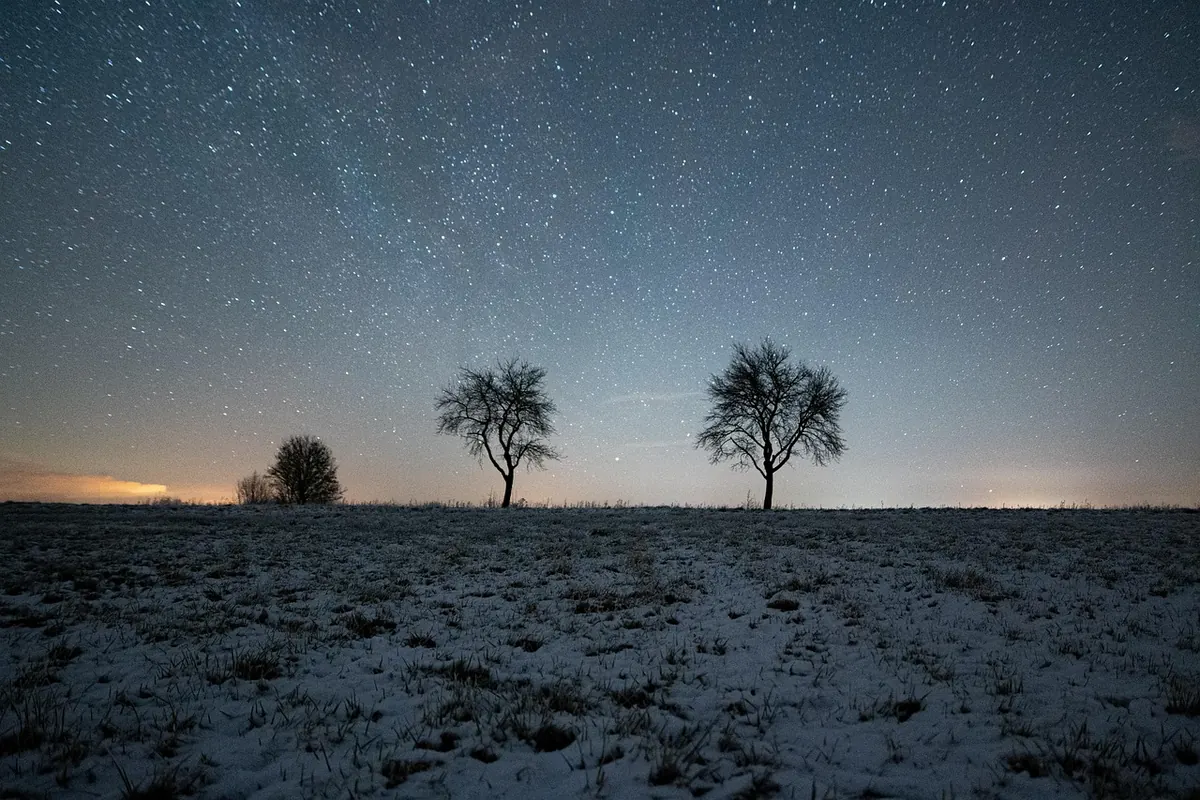
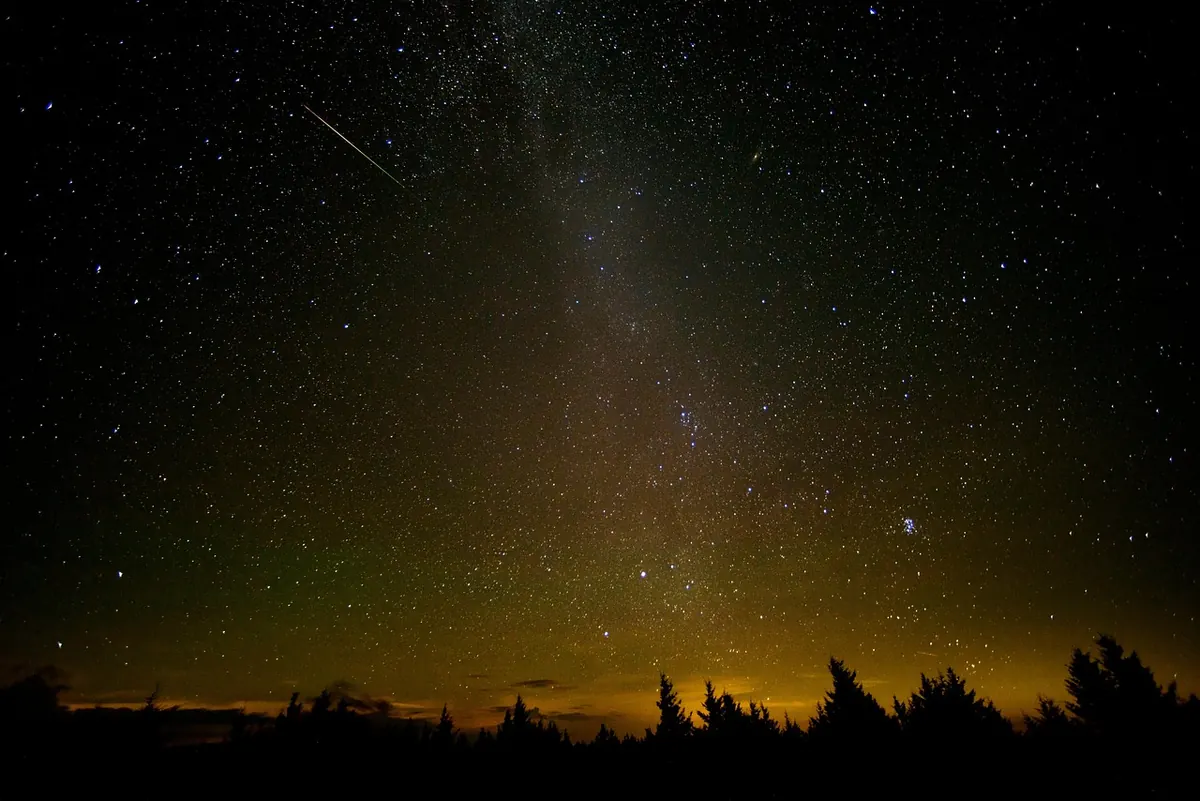
Satellites shine by reflected sunlight. In the middle of the night, Earth's shadow covers low orbits, so most spacecraft are dark and invisible. The problem window is twilight — roughly an hour or two after sunset and before sunrise — when satellites are still lit by the Sun while the ground beneath them is in darkness.
That timing matters more than it sounds. Twilight is exactly when astronomers hunt for near-Earth asteroids, comets and supernovae, because those searches need a dark sky close to the horizon. A long exposure of ten minutes might catch several satellites, each one leaving a bright streak across the frame. Worse, a bright satellite can saturate detector pixels, leaving a residual trail even after it has moved on.
The radio side is harder to see
Optical trails are the visible symptom. The quieter problem is radio. Satellites transmit, and their electronics spill a little energy outside the exact frequencies they are licensed to use. Radio astronomy relies on bands reserved internationally for passive use, with no transmissions allowed at all. In practice, a spacecraft passing overhead can still register in those bands, which is why radio observatories have reported interference in frequencies that are supposed to be silent.
For a radio telescope, a single interfering satellite can be worse than a streak on a photograph. You cannot remove it afterwards if it has swamped the signal you were trying to measure.
What is being done about it
Operators have made real changes. Darkening coatings and sunshades reduce how much sunlight a satellite reflects. Some spacecraft adjust their orientation to avoid throwing a bright glint towards the ground. Fleets increasingly publish orbital data so observatories can predict passes and schedule around them, and some operators have agreed to avoid pointing their beams at major telescope sites.
Astronomers, meanwhile, are pushing for brightness limits, better coordination before launches, and stronger protection for radio quiet zones. The International Astronomical Union runs a centre dedicated to protecting the dark and quiet sky from satellite interference, and national regulators and the ITU handle licensing and spectrum. None of this is settled. The realistic goal is not a sky free of satellites — it is a sky where the damage is predictable and manageable.
Getting on with your own observing
You do not need to give up on the night sky. A few adjustments make a noticeable difference.
- Observe around local midnight. This is when Earth's shadow covers low orbits and satellites are least likely to be lit.
- Check passes before you set up. Pass-prediction apps and sites will show you when a bright train is due over your location, so you can plan around it.
- Shoot many short frames instead of one long one. Stacking dozens of exposures with a rejection algorithm removes satellite trails far more cleanly than a single slow frame.
- Keep notes. Bright trails near twilight, and where they appear, are useful information for the amateur community.
- Support dark sky work. Local astronomy groups and dark sky campaigns are often the ones arguing for sensible rules.
Constellations are not going away, and there is genuine value in the connectivity they provide. But the night sky is a shared resource, and it is worth knowing when and where these fleets appear — whether you are chasing a glimpse of the ISS or trying to capture a faint galaxy that has not been photographed before.
Photo: SpaceX / Pexels